
Price Monitoring in E-commerce
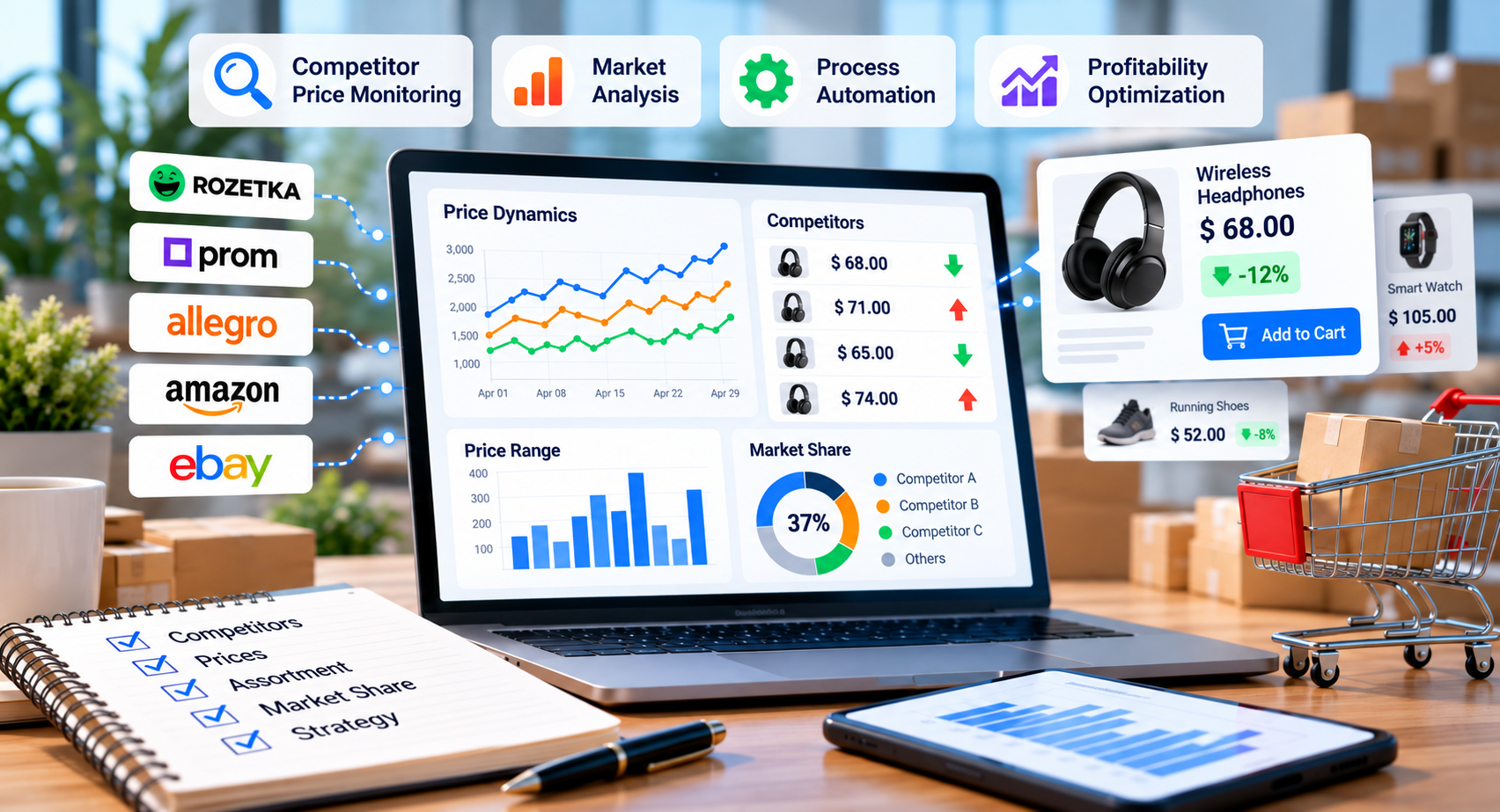
Price monitoring in e-commerce helps manufacturers, distributors, and online retailers track market conditions, compare competitor prices, and identify changes across different sales channels. In the fast-paced world of online retail, where prices, product assortments, and the competitive landscape change rapidly, regular data analysis becomes an essential part of effective pricing management.
Key Features of Pricing in E-commerce
In online retail, customers can quickly compare offers from different sellers, making price one of the key factors in competition. However, focusing solely on the lowest price can lead to reduced profit margins and price wars. Effective pricing in e-commerce requires a balance between competitive positioning, profitability, demand, and the overall business strategy.
Competition in Online Retail
In e-commerce, competition takes place among online stores, marketplaces, and individual sellers simultaneously. Customers can compare prices, delivery terms, product availability, and offers from different retailers within minutes. Therefore, businesses need to analyze not just individual competitors, but also overall market conditions and changes in the competitive landscape.
Competitor Price Monitoring in E-commerce
Competitor price monitoring helps businesses track current market offers, monitor price changes, and understand how other sellers operate. It is important to analyze not only the lowest price but also the overall price range, price trends, product availability, and the competitive positions of individual sellers. This data enables businesses to make informed decisions about their own pricing strategies.
Marketplaces and Pricing Management
Marketplaces create a particularly dynamic pricing environment where the same product can be offered by dozens of sellers simultaneously. Prices, promotions, and product availability can change throughout the day, making manual tracking increasingly inefficient. Regular data collection and analysis help businesses assess a product’s competitive position among other offers and respond promptly to significant market changes.
Product Range and Availability
In e-commerce, it is important to analyze not only prices but also competitors’ product ranges and availability. When a product is out of stock at one retailer, it can affect demand and pricing at other stores, while the introduction of new products can influence competition within a category. Regular monitoring of product ranges and availability helps businesses better understand market changes and evaluate them alongside pricing data.
Monitoring Seller and Dealer Prices
For manufacturers, brands, and distributors, e-commerce presents an additional challenge: monitoring prices across a large number of sellers and dealers. Regular price monitoring allows businesses to track actual product prices, compare them with recommended retail prices (RRP) or minimum advertised prices (MAP), identify significant deviations, and analyze how these deviations spread across different online sales channels.
Process Automation in E-commerce
Automation helps businesses manage large volumes of data on prices, products, sellers, and competitors without constantly checking websites manually. Price monitoring systems can regularly collect information, maintain a history of changes, and organize data for further analysis. This reduces the time spent on routine tasks and allows teams to focus on making informed decisions.
Data Analytics in E-commerce
Data analytics transforms collected information about prices, product ranges, availability, and competitors into actionable insights for decision-making. It is important to analyze trends over time, compare different periods, and identify patterns in market behavior. This helps businesses assess changes in the competitive landscape and make timely adjustments to their pricing and product assortment strategies.
Pricing as Part of Business Strategy
Modern e-commerce requires a systematic approach to managing data on prices, product ranges, availability, sellers, and competitors. When this data is regularly collected and analyzed, businesses gain a comprehensive understanding of market conditions and can respond more quickly to changes. Systematic price monitoring in e-commerce, combined with data analytics and automation, provides a foundation for effective online sales management.