
Pricing
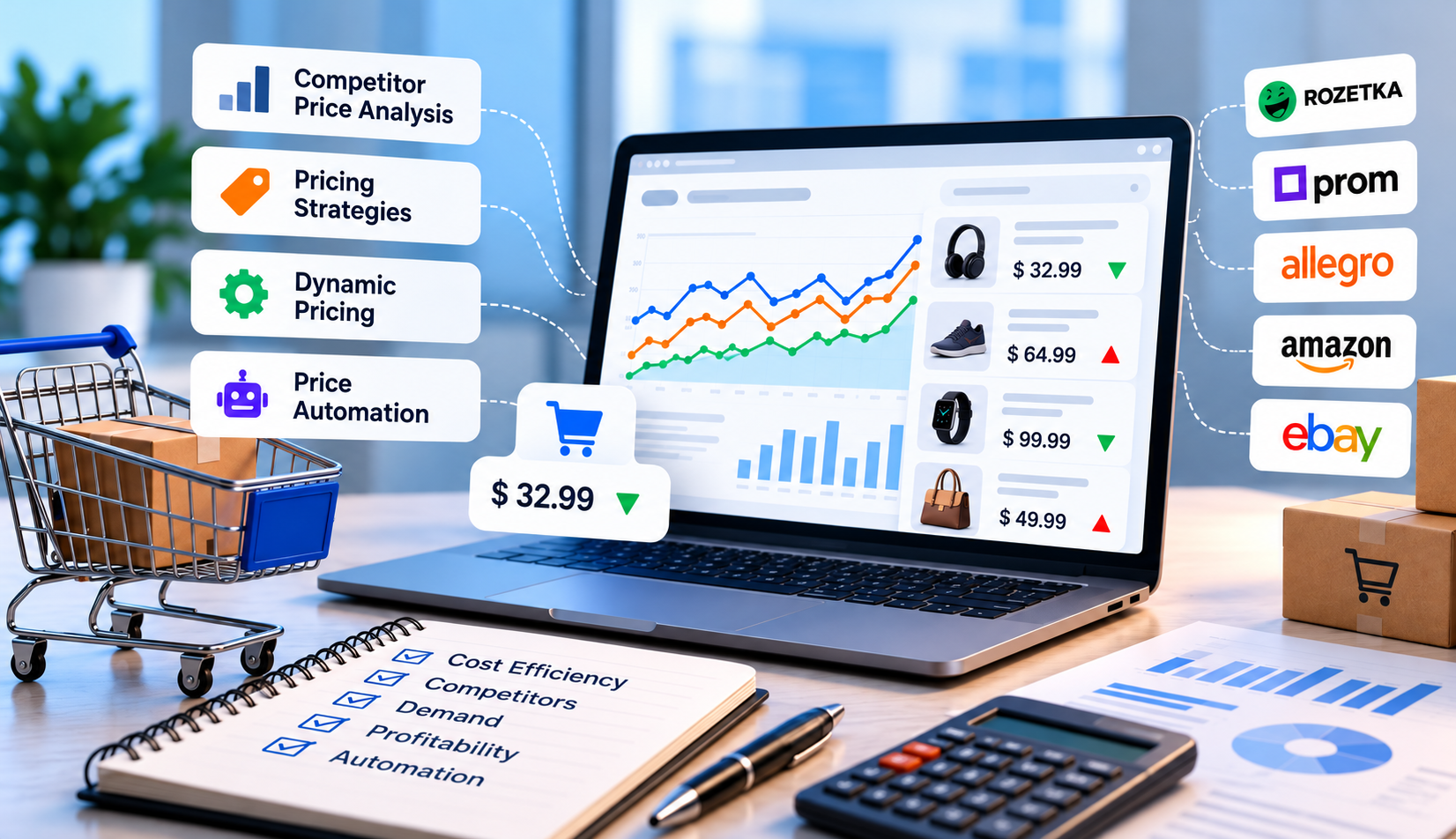
Pricing is the process of setting and managing product prices based on costs, demand, competitive conditions, and business objectives. In e-commerce, prices can change rapidly, so an effective pricing strategy requires regular market analysis and up-to-date data on competitors’ offers.
Why Businesses Need a Systematic Pricing Strategy
A systematic approach to pricing helps businesses maintain a balance between competitiveness, profit margins, and sales volume. Instead of changing prices on an ad hoc basis, a company can take into account competitors’ pricing, demand, seasonality, inventory levels, and its own business objectives. This makes it possible to respond more quickly to market changes and avoid unjustified pricing decisions.
Key Factors Influencing Prices
Product cost, demand levels, competitor prices, seasonality, inventory levels, marketing activities, and overall market conditions all influence pricing. The importance of these factors varies across product categories, so effective pricing requires a comprehensive analysis rather than relying on a single indicator.
Main Pricing Strategies
Businesses can use different pricing strategies depending on their objectives and market conditions. Common approaches include cost-based pricing, competitor-based pricing, value-based pricing, and dynamic pricing. In practice, companies often combine several approaches, adapting them to their product categories, demand levels, and competitive environment.
Dynamic Pricing in E-commerce
Dynamic pricing involves regularly adjusting prices in response to market changes and predefined business rules. Pricing calculations may take into account competitor prices, demand, inventory levels, profit margins, and other indicators. Automating this process enables businesses to respond more quickly to market changes, but it requires clearly defined limits to prevent unwanted price reductions and price wars.
The Role of Competitor Prices in Pricing
Competitor prices are an important benchmark, but they should not automatically determine a business’s own product prices. When analyzing the market, it is important to consider not only the lowest available offer but also seller positioning, sales conditions, product availability, and the overall price range. Competitor monitoring data helps businesses assess market conditions and make more informed pricing decisions.
RRP and MAP in Pricing Strategy
For manufacturers and brands, the recommended retail price (RRP) and minimum advertised price (MAP) can play an important role in pricing policy. They serve as pricing benchmarks when working with dealer networks and analyzing seller offers. Regular monitoring of actual prices helps identify significant deviations, assess pricing trends, and understand which sellers or sales channels influence market pricing conditions.
Pricing Automation
Pricing automation enables businesses to use predefined rules and up-to-date market data to calculate or adjust prices quickly. A system can take into account competitor prices, minimum profit margins, inventory levels, demand, and other parameters. Automated price changes should operate within clearly defined business constraints to maintain control over profitability and the overall pricing strategy.
How to Evaluate Pricing Effectiveness
Pricing effectiveness should be evaluated not only by price levels but also by changes in profit margins, sales volumes, competitive positioning, and market response. It is important to analyze results over time and compare them with established business objectives. This helps businesses understand which pricing decisions are effective and which require adjustment.
Pricing as Part of Business Strategy
Pricing directly affects a company’s profitability, competitiveness, and market positioning. Therefore, pricing decisions should be aligned with the overall business strategy and based on up-to-date data, performance analysis, and clearly defined objectives. A systematic approach enables businesses not only to respond to changes in competitor prices but also to actively manage their own pricing policies.